Business-specific, not generic
Scored against your product's standard, your domain rules, and your workflow — so you can trust a pass, not take a generic “looks reasonable” on faith.
Evaluation Builder
Argmin AI builds a calibrated evaluator that gates every model, prompt, or agent change against the cases your team cannot afford to regress.
First evaluator free · No card · Your data stays private
Run the quality bar before the product change reaches users.
You're about to ship an AI change, and the only quality check is someone's gut feeling.
Why generic judges fail
A generic judge can tell you an answer sounds reasonable.
It cannot know your task, policies, edge cases, or expert standard until it is calibrated.
Where trust comes from
Scored against your product's standard, your domain rules, and your workflow — so you can trust a pass, not take a generic “looks reasonable” on faith.
Your experts' corrections become the rubric and the labels — it reuses their judgment, it doesn't replace them — so the judge scores the way your team would.
It cold-starts the judge and a calibrated test set from your traces, plus synthetic and adversarial cases.
Criterion-level scores with a reason for every pass or fail, so you see what broke and why.
Versioned rubric and history; rerun it on every prompt, model, RAG, or agent change.
Outcome
Evaluator · calibrated
Rubrics, edge cases, and judges tuned to your domain and aligned with your experts. Ready to run on every model, prompt, or agent change so you see what improved and what broke.
Dataset · aligned
A lightweight, labeled set built during calibration. You confirm, override, or drop the labels, so it reflects your team's judgment, not the model's. Enough to start testing the AI agent you are building.
Process
A calibration flow for teams that do not have a clean golden dataset yet.
 Inputs
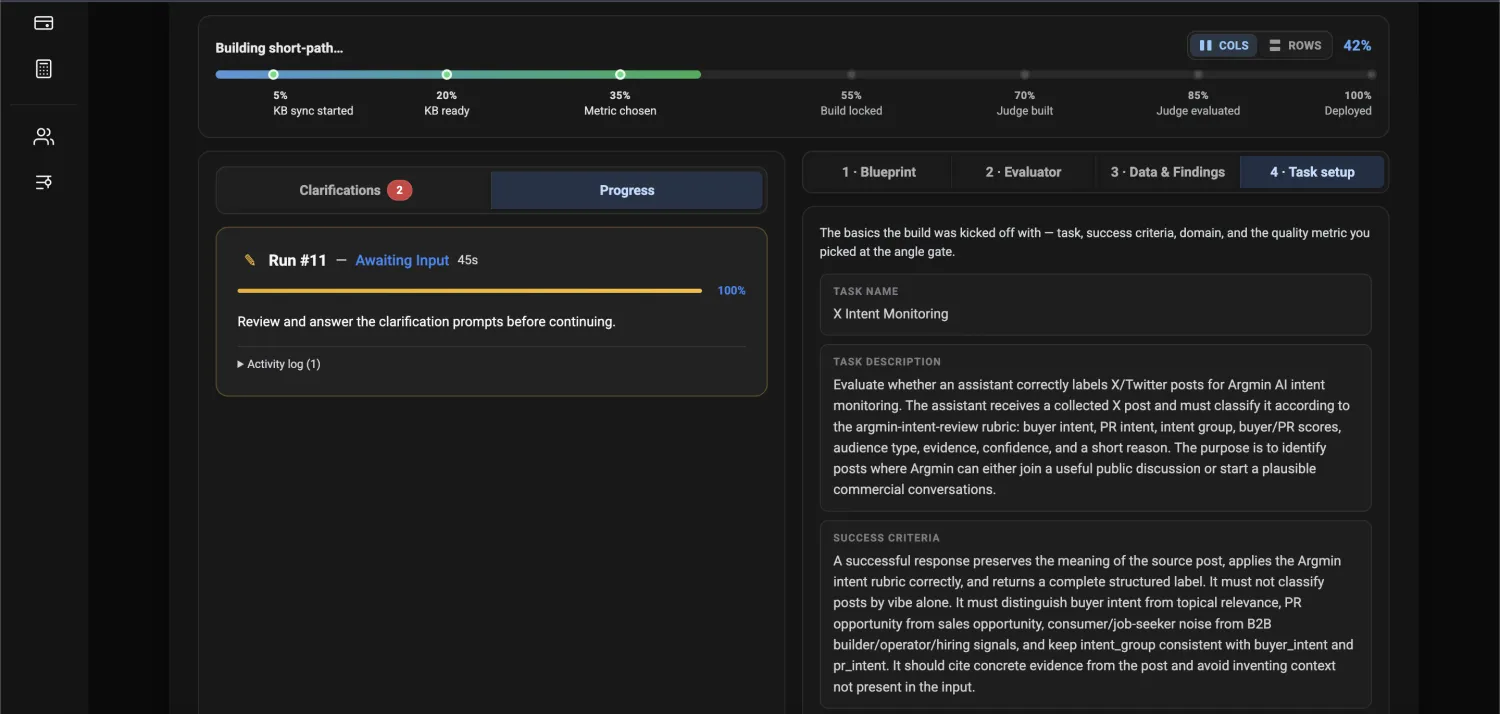
Start with the AI task, domain docs, selected traces, and a few hypotheses about what good looks like. No golden dataset is required upfront.
 Cases
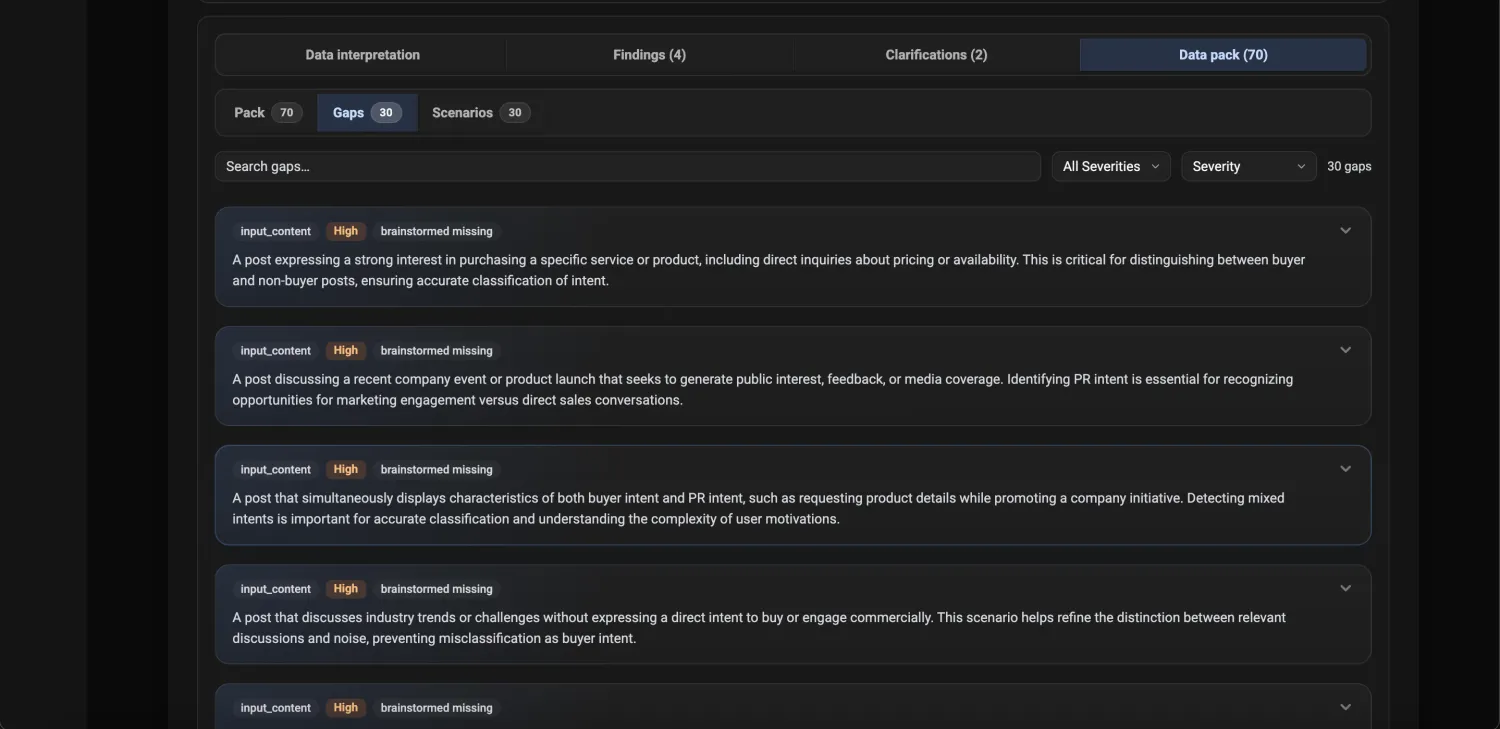
CasesThe platform finds normal, edge, and high-risk examples and surfaces where the evaluator disagrees with experts, so review time is spent on cases that actually move agreement.
 Review
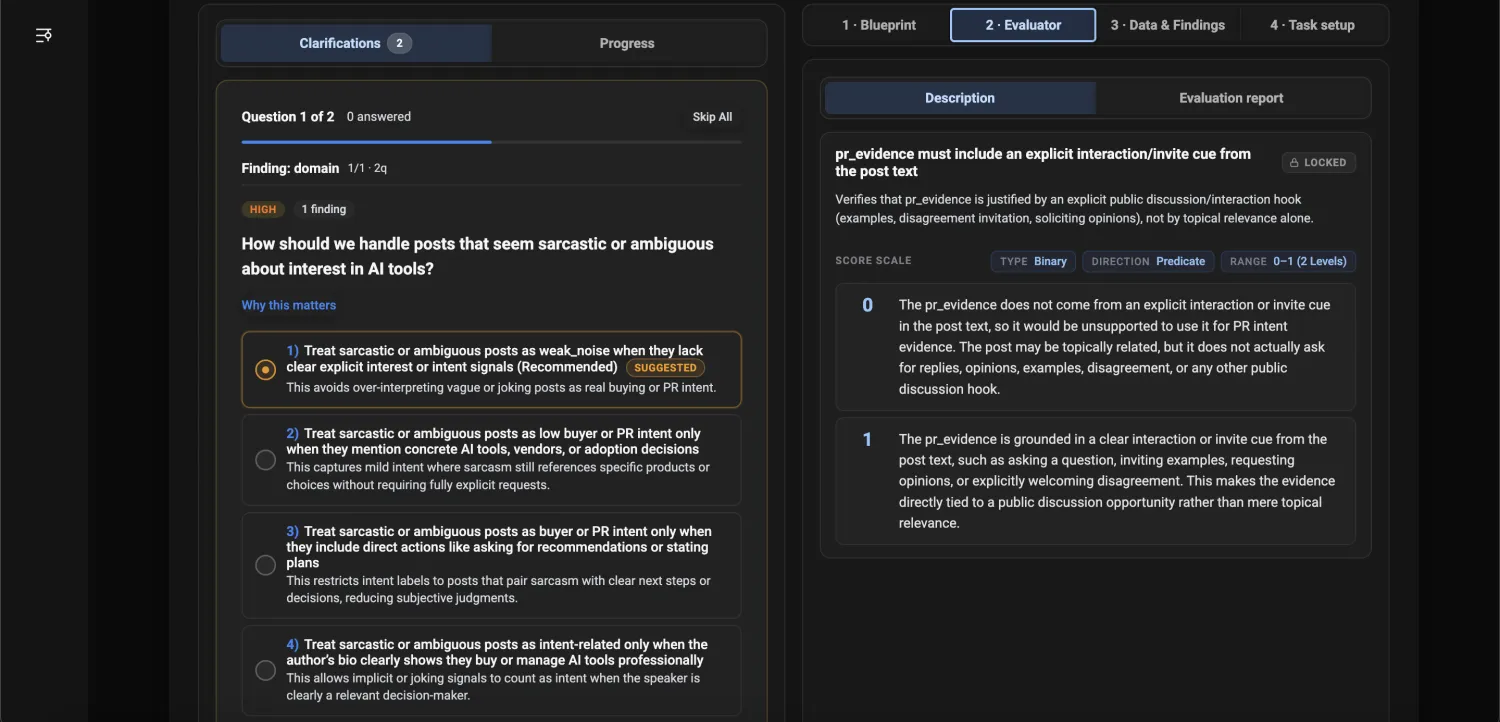
Experts review and correct evaluator calls Argmin AI drafts first, never from a blank page.
 Calibrate
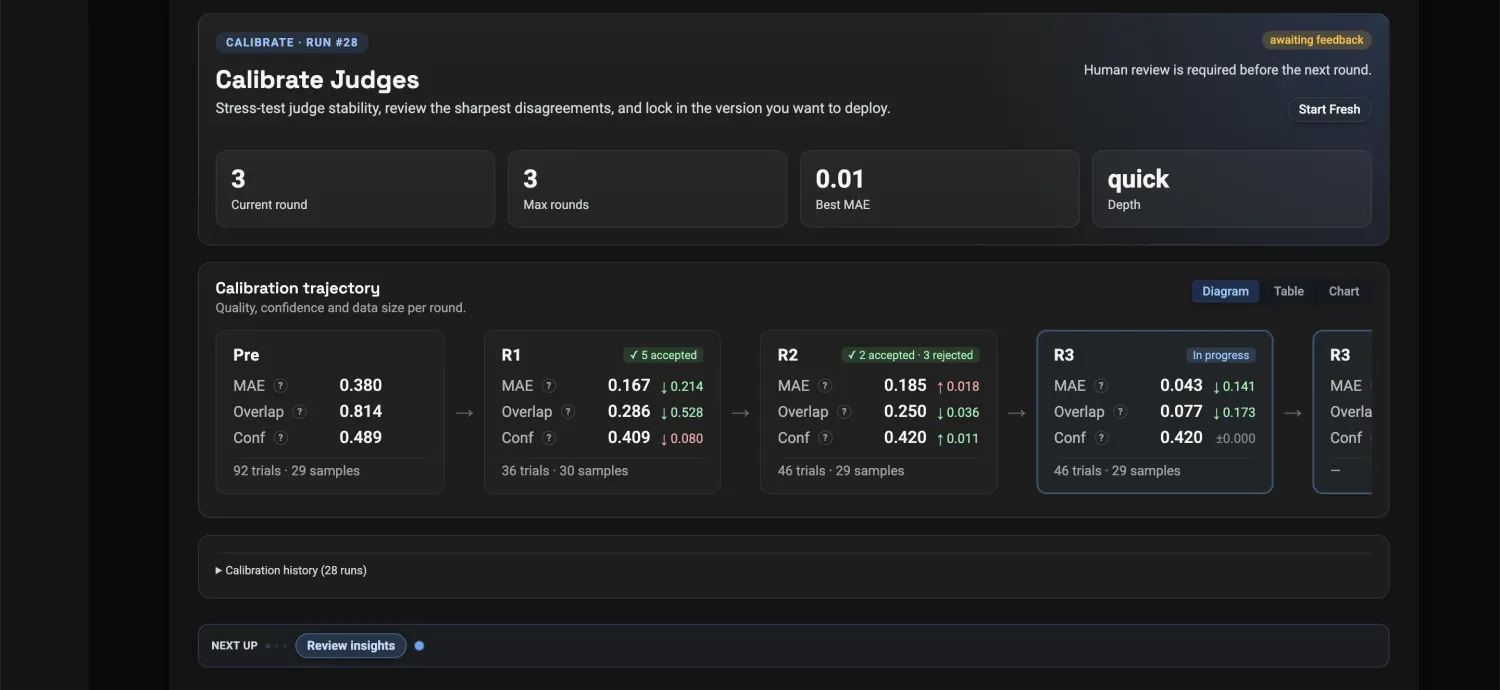
Every correction sharpens the evaluator and updates the calibrated eval set, quality rubric, score anchors, and calibration history.
 Run
RunUse the evaluator on prompt edits, model switches, RAG updates, routing changes, and agent releases.
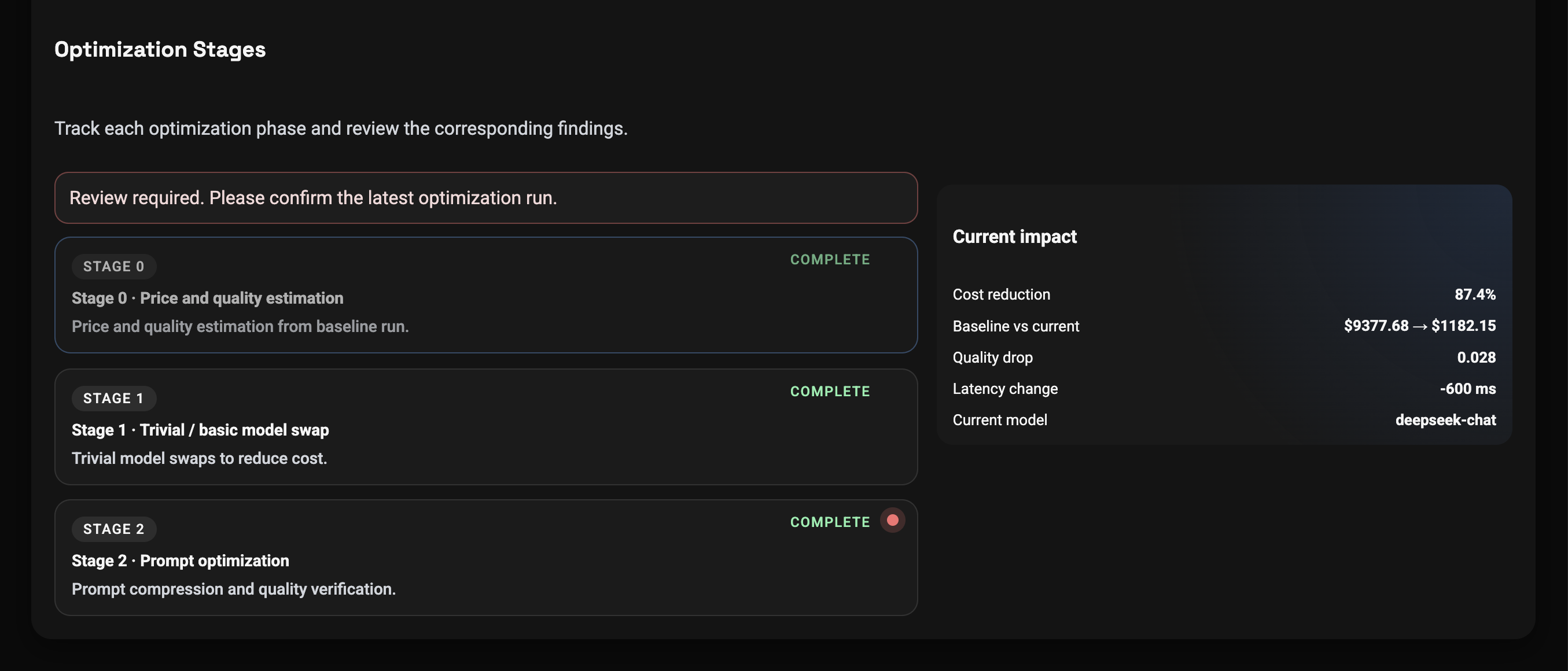
Validation
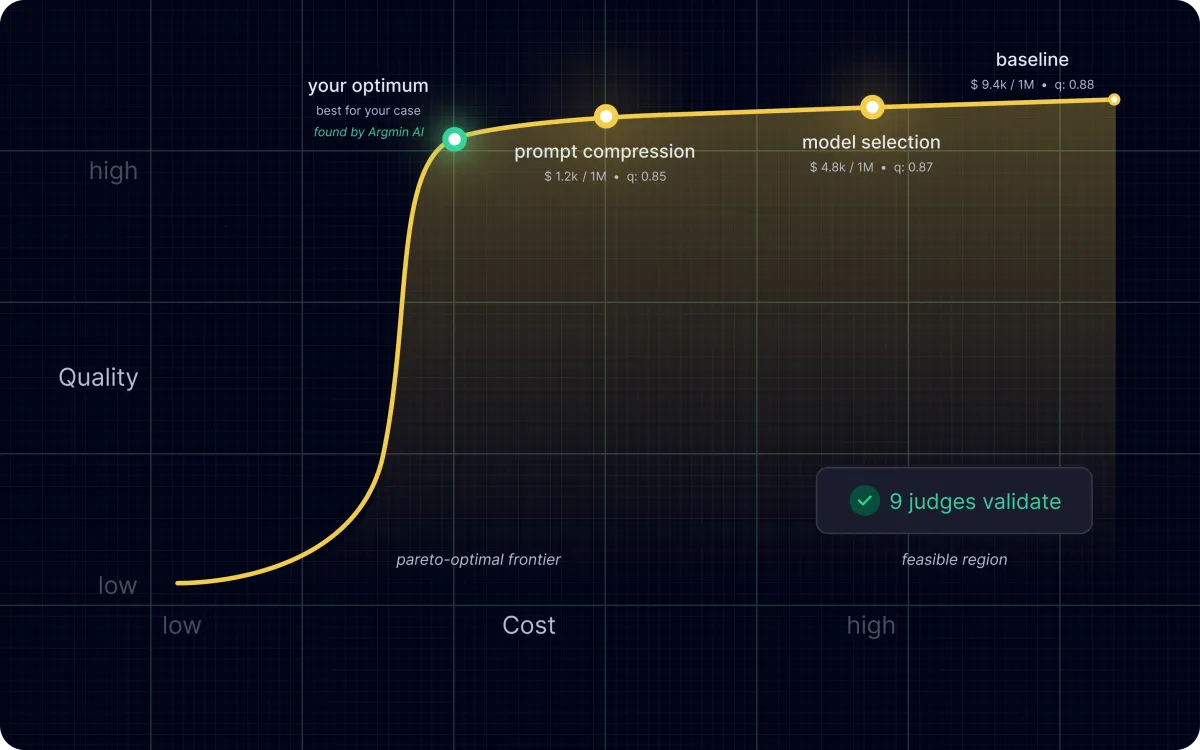
0.0%
Safety maintained while optimizing cost
0%
Cost optimization
0
Edge cases
0
Evaluators
Main challenge: Reduce cost only after safety and quality had a measurable gate
The point is not to get another dashboard. The point is to know which AI changes pass the agreed quality bar and which ones need work.
Enter your email and we'll send the case study PDF.
We process your email to provide access and start the whitepaper delivery flow. You can read our Privacy Policy.
Before you ship
See how a proposed AI change is checked against calibrated cases before it moves into release review.

Turn product standards into checks that run before prompt, model, retrieval, or agent changes ship.

Keep the small set of cases that would change a release decision if they regressed.

Experts shape the rubric and corrections, so the evaluator reflects the standard your team actually trusts.

Keep a record of what changed, what failed, what passed, and why the evaluator was trusted.
Prompt edits / Model switches / RAG updates / Agent releases
Your data stays privatePrivate by default
Used only to build and run your evaluator.
We don't train on itNever used to train
Never used to train shared models.
You decide what's sharedYou control sharing
NDA and tighter infra available on request.
1 free run to test1 free test run
No card required. See it work on your data first.